A garage door is more than a curbside facelift. It controls daily rhythms, protects tools and vehicles, and stands between your home and the weather. Install it wrong and you pay for years in noise, costly repairs, and safety hazards. Install it right and the door disappears into reliable, trouble-free service. Below I explain the most common mistakes I see in garage door installation in Mint Hill NC, why they matter, and how to avoid them. Expect practical tips, trade-offs, and realistic numbers from hands-on experience.
Why garage door installation deserves careful attention
A residential garage door system is deceptively simple until it is not. Springs hold thousands of pounds of potential energy. Tracks must be perfectly plumbed and aligned to prevent binding. Openers rely on travel limits and sensors that must be set with precision. When any one of these elements is compromised, problems show up quickly: sagging panels, a door that reverses mid-cycle, premature opener burnout, or worse, a snapped spring. Repair costs for botched installations can climb into the high hundreds or thousands, depending on damage to the door, opener, or safety systems.
Local factors in Mint Hill matter too. Our climate swings between humidity in summer and occasional freezing in winter. That affects lubrication schedules, steel contraction, and even the choice of insulation and materials. Salt from road treatment is less of a concern than in coastal areas, but gravel and yard debris can get tracked into tracks and rollers. A technician who understands local conditions will choose hardware and settings that age gracefully in our environment.
Common mistakes and how they manifest
Poor measurements and incorrect door sizing I've seen shops order doors that were half an inch too tall or a few inches too narrow. That sounds trivial until installers struggle to shim, cut, or force components into place. A door that is too large can bind in the tracks or rub against the jamb, wearing paint and seals. A door that is too small leaves gaps that let drafts and pests in and can compromise insulation performance.
How to avoid it: measure twice, confirm clearances, and always check both rough opening and finished opening dimensions. Ask for the specification sheet and compare the ordered size against on-site measurements. Expect to allow for 1/8 to 1/4 inch clearance on each side for hardware and weatherstripping in most cases.
Underestimating spring tension and misidentifying spring type Torsion springs are wound to a specific cycle life and balance the door weight. Install the wrong spring or set tension incorrectly and the door will be heavy at the midpoint, bounce, or put excessive strain on the opener. Converting a two-spring system to a single spring or vice versa without recalculating torque is a common error.
How to avoid it: weigh the door or use a scale test to determine correct tension. Use springs rated for appropriate cycle life—10,000 cycles is common for economy springs, 25,000 or 50,000 for higher-end replacements. If the installer guesses, ask for calculations or documentation. Never attempt to adjust torsion springs yourself; they contain dangerous stored energy.
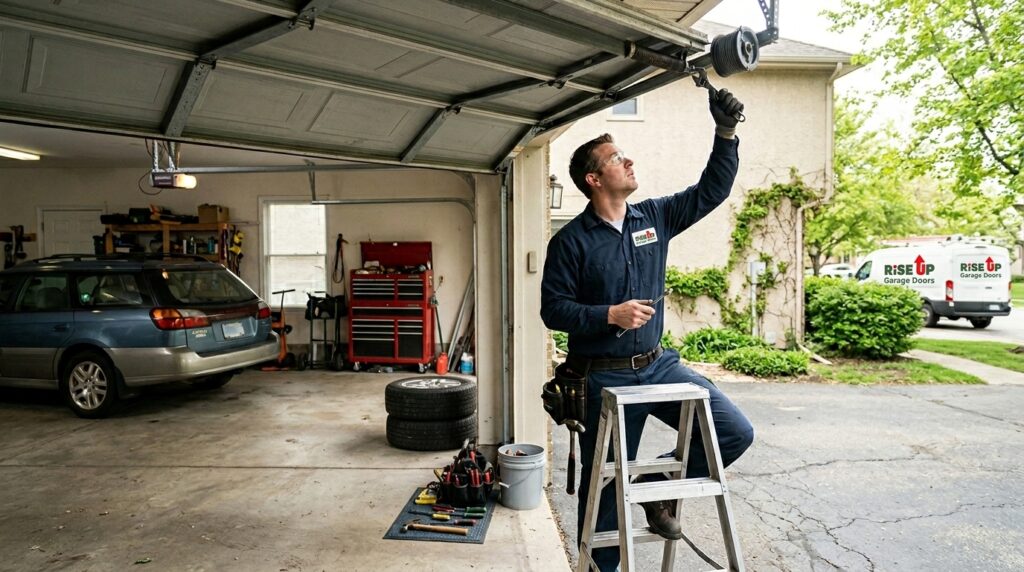
Cheap or inappropriate hardware selection An installer trying to reduce cost may specify lightweight rollers, low-cycle springs, or undersized track. These choices show themselves as noise, tracking problems, and shorter service life. For insulated doors in Mint Hill, you want hardware that can support the additional panel weight.
How to avoid it: insist on steel or nylon rollers with sealed bearings rather than plastic. Ask about the spring cycles, roller diameter, and whether the tracks are 2-inch or 2 3/4-inch. For heavier doors, choose higher-cycle springs and heavier gauge tracks. If a quote lacks this level of detail, get a second opinion.
Improper track alignment and inadequate wall/ceiling framing Tracks must be plumb and parallel, with correct rise and header height. A misaligned track causes the door to drag on one side and can warp panels over time. I've replaced doors where the framing behind the jamb was rotted or undersized, and the new door simply pulled loose of the header because anchors were set into thin plywood instead of solid studs.
How to avoid it: verify that installers use a level and straightedge while measuring and that they fasten tracks into structural members, not just drywall. If the header is compromised, repair or beef up the framing before final anchoring. For older homes, expect to replace or reinforce header plates in 10 to 20 percent of installations.
Skipping or skimping on weatherstripping and thresholds Weatherstripping is a small cost that pays back through reduced drafts, fewer more info pests, and less moisture tracking in. I often see DIY installs that leave a visible gap at the bottom because a threshold wasn't installed or the bottom seal was cut short.
How to avoid it: confirm that the quote includes bottom seals, jamb seals, and head seals. For concrete floors with uneven surfaces, use a molded threshold or an adaptive bottom weatherstrip that compresses and maintains contact.
Ignoring safety sensors and opener programming Sensors must be aligned within a narrow vertical and horizontal window and wired correctly. Similarly, opener travel limits, force settings, and manual release functionality must be tested. If safety beams are misaligned by an inch or obstructed by dirt, the door will not close reliably. If force settings are too high, the door can close with enough force to harm a person or damage property.
How to avoid it: require a demonstration of sensors during installation, including obstructing the beam to show reversal. Ask the installer to set and explain force settings and to show you how to use the manual release in case of power outage. Test the auto-reverse with a 2x4 placed flat on the floor under the door; the door should reverse reliably without crushing the wood.
Common mistakes checklist
- Verify measurements for rough opening and clearances before ordering any door. Confirm spring type, cycle rating, and that spring tension was calculated, not guessed. Ask for hardware specifications for rollers, tracks, and brackets to match door weight. Ensure tracks are anchored into solid framing and that the header and jambs are structurally sound. Test sensors, travel limits, force settings, and manual release in front of you.
Installation pitfalls related to openers and electronics
Mismatched opener power and door weight Openers are rated by horsepower and lifting capacity. A 1/3 HP opener struggling with a heavy, insulated sectional door will overheat and wear out the trolley and belt. Conversely, oversizing an opener can lead to costlier initial expense but may be wise with large or high-cycle doors.
Trade-off advice: for single or double-car residential doors, 3/4 HP or 1 HP units are often the best balance when combined with a high-cycle spring. For lighter, single-car doors, a 1/2 HP may suffice. When in doubt, err toward a stronger unit if you expect daily heavy use or a heavier door.
Poor wiring and grounding practices Openers, keypads, and sensors need neat, secure wiring. I have rerouted wires that were stapled to the track and frayed by moving parts. Poor routing leads to shorts, intermittent failures, and frustrating troubleshooting.
How to avoid it: expect installers to use staples that do not penetrate wires, run conduit or cable protectors where wires cross moving parts, and connect all components to a proper ground. If your home has older electrical work, consider having an electrician verify the outlet is on a dedicated circuit and has a functioning ground.
Not setting up battery backup or smart features properly Battery backup options are common and invaluable during power outages. Likewise, smart openers require secure Wi-Fi setup and sometimes firmware updates. Installers who skip this step leave you with features that do not work or are insecure.
How to avoid it: request activation of battery backup and a walkthrough of smart features. Change default passwords on any associated apps and verify the installer updates firmware if available. For privacy-minded homeowners, ask which data the opener collects and how it is used.
Hidden costs and warranty pitfalls
One-time low bids that rely on upsells You will see low initial quotes that exclude necessary items like weatherstripping, higher-cycle springs, or proper anchors. The low price hooks the sale, and then the installer presents a list of necessary extras. This happens in all trades, and it is legal, but it is frustrating.
How to avoid it: ask for a line-item quote. If a price sounds significantly lower than competitors, request clarification about what is excluded. A transparent contractor will explain trade-offs in hardware grade and warranty.
Warranty and service limitations Manufacturers and installers offer different warranty types. Some parts come with a 1-year warranty, others with five years. Labor warranties vary widely. A cheap part with a long warranty from the manufacturer still costs you labor if the installer charges to replace it later.
How to avoid it: read warranties carefully. Prefer a company that offers at least a one-year labor warranty and clear parts warranty terms. If you use a local service such as Rise Up Garage Doors, ask about their response time for warranty calls and whether they keep common replacement parts in stock.
When DIY crosses into dangerous territory
Why springs and torsion systems are not a DIY weekend project Torsion spring adjustment and replacement are dangerous. A spring that slips or releases unexpectedly can cause severe injury or worse. I have responded to calls where homeowners tried to adjust springs with inadequate tools and ended up with a mangled hand or a door off its tracks.
Safer DIY tasks and when to call a professional There are sensible projects for a competent homeowner. Replacing weatherstripping, lubricating rollers and hinges with a silicone-based spray, tightening loose screws, and testing sensors are tasks you can do safely. Anything involving springs, cable replacement, track realignment, or wiring should be left to professionals with proper tools, insurance, and experience.
Red flags when hiring an installer
No local address or poor online presence A company without a physical address, vague contact info, or only generic reviews should be treated cautiously. You need an installer who will stand behind their work and return for warranty issues.
Vague or missing estimates If the quote lacks details on materials, hardware brands, spring cycle ratings, and labor, it is harder to compare with other bids and easier to be surprised later.
Pressure tactics or insistence on immediate payment before work begins Legitimate professionals will request a reasonable deposit but should be willing to provide documentation and a clear schedule. Beware of those who demand full payment in cash upfront with no contract.
How local contractors can add value
Why choose a Mint Hill specialist like Rise Up Garage Doors Local companies know local conditions and common home framing styles in Mint Hill. They can recommend appropriate insulation, thresholds, and hardware that hold up to our summers and winters. A neighborhood service provider is also more likely to return quickly for adjustments or warranty service.
Value-added services worth asking for Ask if the installer will: balance the door after installation and demonstrate it; show the auto-reverse test; provide an instruction sheet for opener programming; and leave spare remotes or batteries. Good installers will also show you how to operate the manual release safely and where to store the release rope.
Realistic cost expectations and budget planning
Typical price ranges and what affects them Expect broad variation. A basic single-car steel door with a standard opener might land in a lower price band, while a heavy insulated double door, premium hardware, and a smart opener will be at the higher end. Labor complexity, framing repairs, and custom finishes increase cost. If a supplier quotes significantly below market, ask why and what corners are being cut.
Planning for lifecycle costs Think beyond the sticker price. Higher-cycle springs, better rollers, and a stronger opener increase initial cost but can cut maintenance and replacement frequency. A reasonable investment in parts that reduce friction and wear will save you money over 5 to 10 years.
Final persuasive case for doing it right the first time
Garage door installation is one of those projects where a little extra attention up front prevents a lot of frustration later. The choices you make at purchase and the installer you hire determine whether the door becomes a dependable part of daily life or a recurring problem. Take measurements seriously, demand specifics about springs and hardware, verify structural anchoring, and insist on proper programming and testing of safety features. If you value speed and certainty, choose a reputable local contractor that stands behind both parts and labor, such as Rise Up Garage Doors, and ask for a written, itemized quote. The modest extra cost for quality installation and materials pays back in quieter operation, fewer repairs, and most importantly, safer operation for everyone in the home.
If you want, I can walk you through a checklist to prepare your garage for installation, suggest questions to ask when getting quotes from Mint Hill contractors, or review a quote you already received.
Rise Up Garage Doors
Mint Hill, NC, United States
+1 (980) 240-2447
[email protected]
https://riseupgaragedoors.com/